There’s a quiet shift that happens the moment you step into a truly exceptional home. The pace slows. The details begin to matter more. Light, texture, privacy, and space take on a different weight.
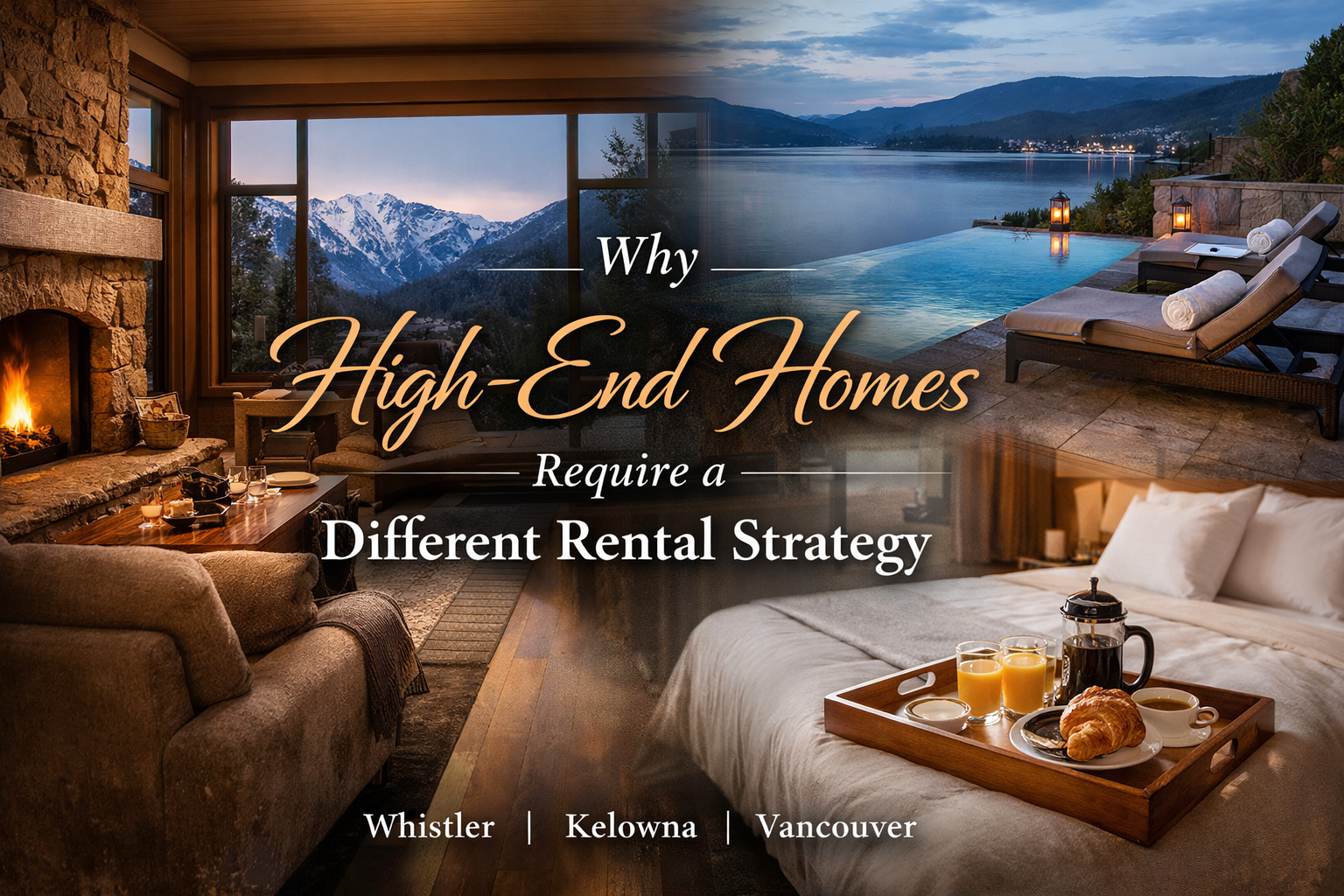
Why High-End Homes Require a Different Rental Strategy
There’s a quiet shift that happens the moment you step into a truly exceptional home. The pace slows. The details begin to matter more. Light, texture, privacy, and space take on a different weight.
And yet, many high-end properties are still marketed and managed as if they were interchangeable with standard vacation rentals. The result is often underperformance, mismatched guests, and a diluted experience that never quite reflects the home’s true value.
Luxury, when handled casually, becomes ordinary.
The Problem with a Standard Approach
A typical rental strategy prioritizes volume. More bookings, more turnover, broader appeal. That model works for mid-market properties where consistency matters more than distinction.
High-end homes operate differently.
They are not designed for everyone. They are designed for someone very specific.
When pricing, marketing, and guest experience are treated as transactional rather than curated, several things happen:
- The wrong guests book, often with mismatched expectations
- The home experiences more wear than necessary
- Revenue potential is capped despite premium positioning
A five-bedroom architectural retreat in Whistler or a lakefront estate in Kelowna should never compete on the same terms as a downtown condo.
Luxury Is About Alignment, Not Exposure
One of the most overlooked aspects of a luxury rental strategy is restraint.
More visibility does not always mean better outcomes. In fact, high-end homes benefit from selective exposure. The goal is not to be everywhere, but to be seen by the right audience.
This requires:
- Carefully chosen listing platforms and partnerships
- Elevated visual storytelling that captures atmosphere, not just layout
- Messaging that speaks to lifestyle rather than features
A guest booking a premium home is not simply comparing price per night. They are imagining how the space will feel during their stay. That emotional connection must be built long before arrival.
Pricing Is a Signal, Not Just a Number
In the luxury space, pricing does more than drive bookings. It communicates positioning.
Underpricing a high-end home can create hesitation rather than urgency. It raises subtle questions about quality, privacy, and experience. Conversely, confident pricing paired with a refined presentation reinforces trust.
A strong pricing strategy considers:
- Seasonality in destinations like Whistler, Kelowna, and Vancouver
- Local demand patterns tied to events and travel trends
- The uniqueness of the home itself, not just comparable listings
It is less about being competitive and more about being correctly positioned.
The Experience Begins Before Arrival
What truly separates a high-end rental strategy is the understanding that hospitality starts well before check-in.
Luxury guests expect ease. Not excess, but effortlessness.
This includes:
- Seamless communication that feels personal, not automated
- Thoughtful pre-arrival planning, from private chefs to curated itineraries
- A home that is prepared with intention, not just cleaned
The difference is subtle but unmistakable. It transforms a stay into something memorable rather than merely comfortable.
Protecting the Asset While Elevating the Stay
High-end homes are long-term investments. The strategy behind them must balance revenue with preservation.
Fewer bookings, longer stays, and carefully vetted guests often lead to better outcomes than high turnover. The home maintains its condition, and each stay feels more considered.
This approach requires discipline. Turning away the wrong booking is just as important as securing the right one.
A More Considered Way to Rent
Managing luxury rentals is not about scaling quickly or filling calendars. It is about understanding the rhythm of high-end travel and aligning every decision with it.
When done well, the home retains its integrity, the guest experience feels effortless, and the returns reflect the true caliber of the property.
For homeowners who value privacy, longevity, and elevated experiences, a different strategy is not optional. It is essential.
And for guests seeking something beyond the expected, it is the difference between staying somewhere and truly arriving.